On 1 May 2026 the Renters' Rights Act changed how private renting works in England. If you rent privately in Hull, it applies to you whether your tenancy started before or after that date. Here's what changed, in plain English.
The short version
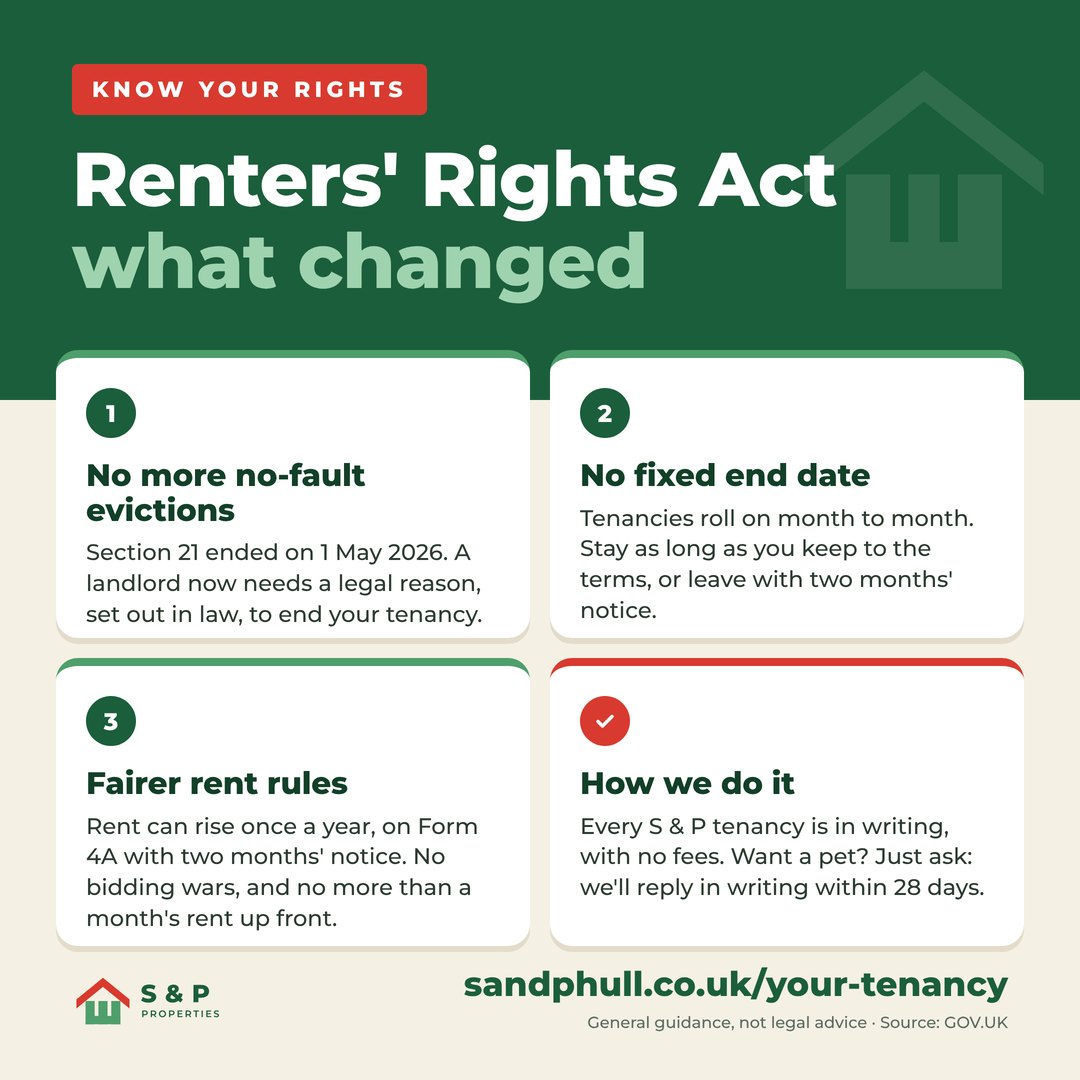
- No more no-fault evictionsSection 21 ended on 1 May 2026. A landlord now needs a legal reason, set out in law, to end your tenancy, and has to give the right notice.
- No fixed end dateTenancies roll on month to month. You can stay as long as you keep to the terms, or leave by giving two months' written notice.
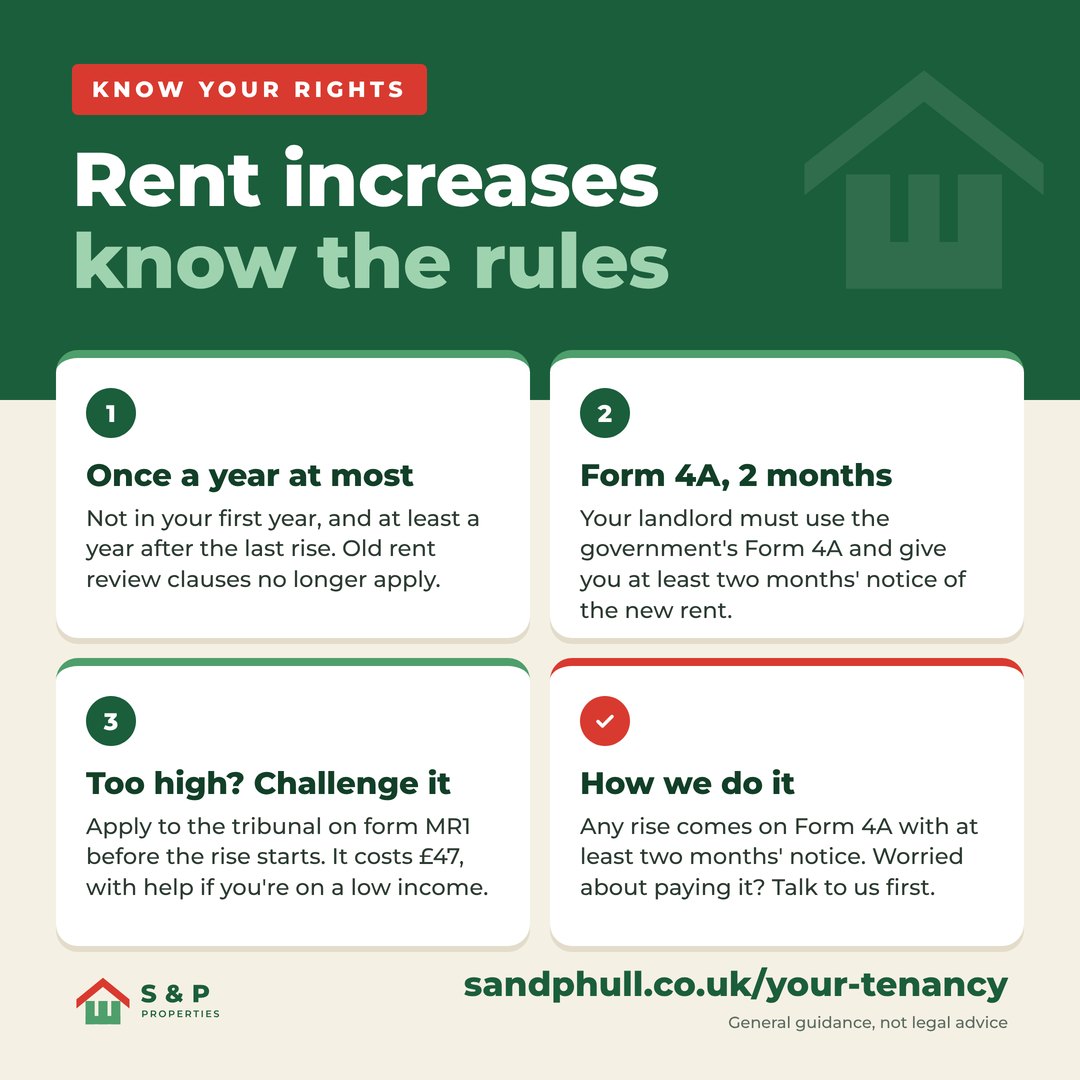
- Fairer rent rulesRent can go up only once a year, on the government's Form 4A with at least two months' notice. No bidding wars, and no more than a month's rent up front.
- How we do itEvery S & P tenancy is in writing, and we never charge fees. Want a pet? Just ask, and we'll reply in writing within 28 days.
That's the short version. Our tenancy guide covers each change in more detail, with links to the official guidance.
The full guideYour tenancy, in plain English: the rules from 1 May 2026sandphull.co.uk/your-tenancyWhat else changed
- Your tenancy is in writing. New tenancies must set out the main terms in writing. If your tenancy started before 1 May 2026, your landlord should have given you the government's Renters' Rights Act information sheet.
- Challenging a rent rise. If you think a rise is too high, you can ask the First-tier Tribunal to decide, as long as you apply before the new rent starts. The fee is £47, and you may get help with it on a low income. See paying rent.
- Pets. You can ask to keep a pet, and your landlord must reply in writing within 28 days and can't refuse without a good reason. See pets.
- No discrimination. Landlords can't refuse you because you have children or receive benefits.
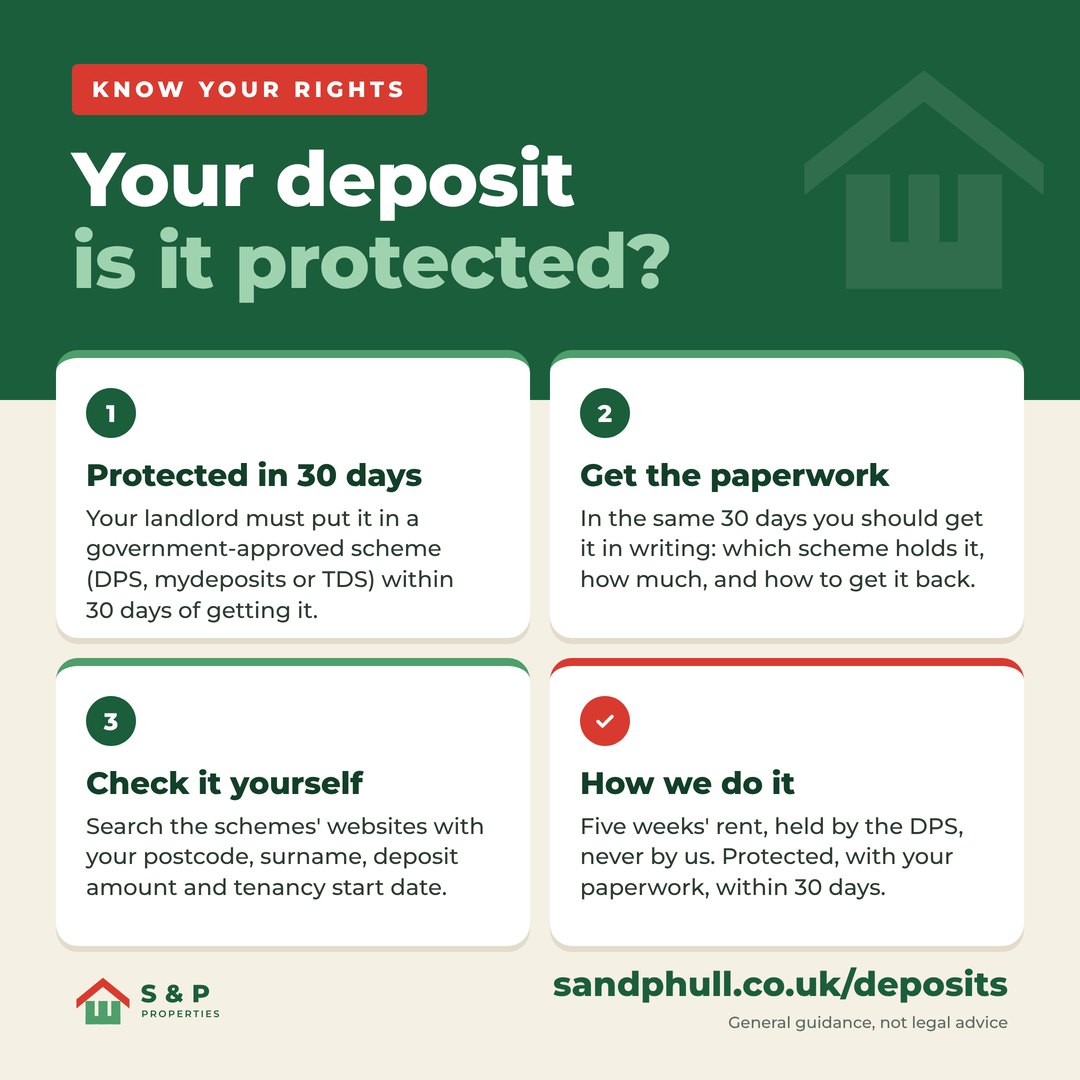
- Fees and deposits. The ban on letting fees and the five-week deposit cap carry on as before. See how deposits work.
What hasn't changed
You still pay rent as agreed and look after the home, and your landlord still has to keep it safe and in good repair. Every adult still needs a right to rent check before a new tenancy starts.
Questions about your own tenancy with us? Just ask. We're happy to talk it through.
This post is general guidance, not legal advice. Questions? Call us on 01482 218060 or email hello@sandphull.co.uk, Monday to Friday, 9am to 5pm.