Your deposit is often the biggest sum you pay when you rent a home. In England, the law says your landlord must protect it in a government-approved scheme, so it's safe and you get it back at the end if nothing is owed. Here's what should happen, and how to check yours.
The three things to know
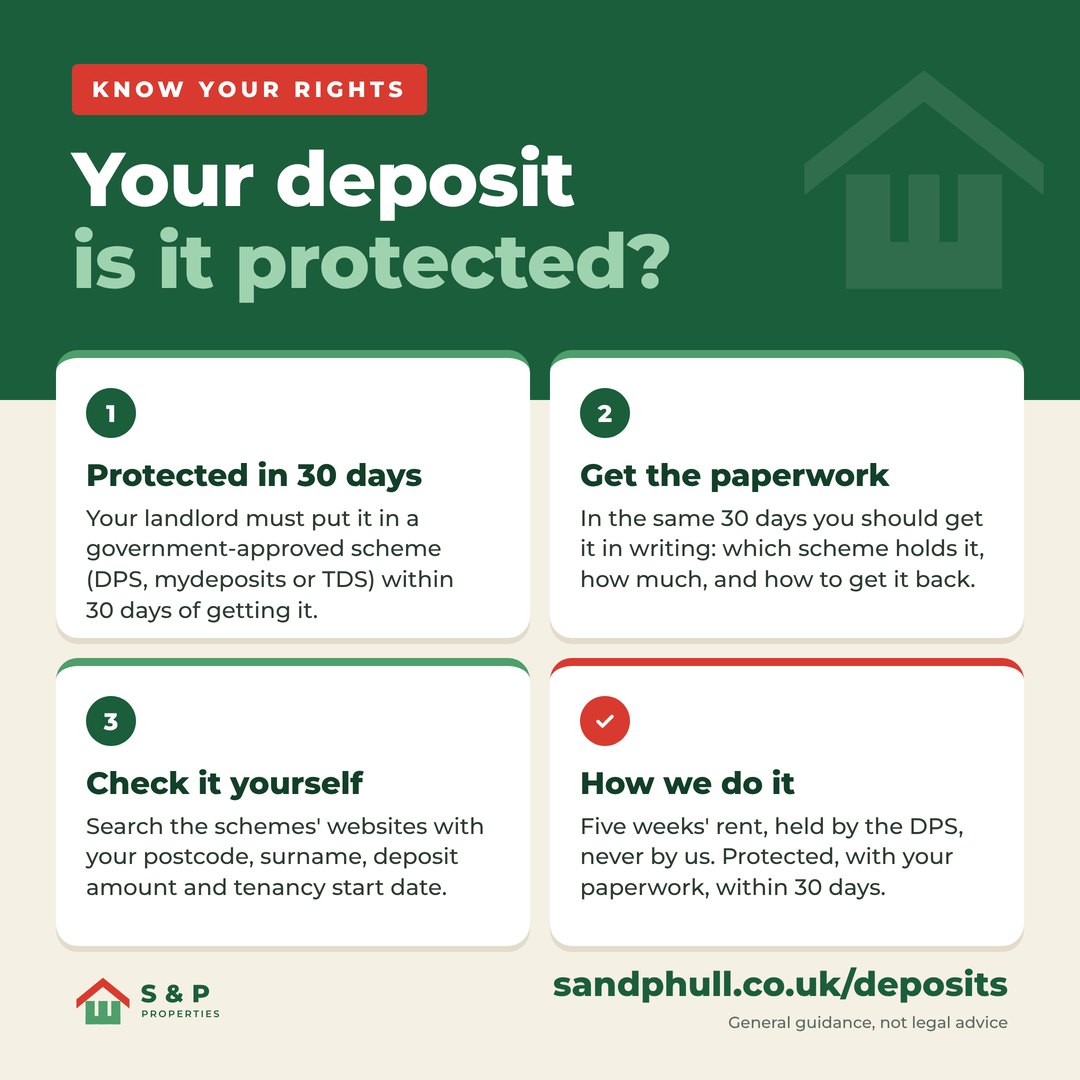
- Protected within 30 daysYour landlord must put your deposit in one of the three government-approved schemes, the Deposit Protection Service (DPS), mydeposits or the Tenancy Deposit Scheme (TDS), within 30 days of getting it.
- Get the paperworkIn the same 30 days, your landlord must give you the details in writing (the "prescribed information"): which scheme holds your deposit, how much it is, how to get it back and what happens if you disagree.
- Check it yourselfEach scheme has a deposit checker on its website. You'll need your postcode, surname, deposit amount and the date your tenancy started.
- How we do itYour deposit is five weeks' rent, paid to the DPS, who hold it for the whole tenancy, never us. We protect it and give you the paperwork within 30 days.
How to check your deposit
- Look for the email. The scheme usually emails you once your deposit is protected. Keep it, and the written details from your landlord.
- Search the schemes. Try the deposit checker on the DPS, mydeposits and TDS websites. If you're not sure which one, check all three.
- Nothing found? Ask your landlord which scheme they used and what name and date it's under. A different spelling or start date can stop it showing up.
If it isn't protected
If your landlord didn't protect your deposit, or didn't give you the written details, within 30 days, you can take them to court. The court can order them to repay the deposit or protect it, and to pay you up to three times the deposit as well. You can usually claim up to six years after the rules were broken.
Talk to Citizens Advice or Shelter first: their help is free and independent. You'll find their guides, and GOV.UK's, in the help and advice links in our tenancy guide.
Good to know
- Five weeks at most. A tenancy deposit can't be more than five weeks' rent where the yearly rent is under £50,000. A holding deposit can't be more than one week's rent.
- Getting it back. When you leave, your deposit must be repaid within 10 days of you and your landlord agreeing the amount. If you can't agree, the scheme's free dispute service can decide. See getting your deposit back.
As shared on our socials
Follow us on X and LinkedIn for plain-English guides for Hull tenants, letting-law updates and news from S & P, every week.

This post is general guidance, not legal advice. Questions? Call us on 01482 218060 or email hello@sandphull.co.uk, Monday to Friday, 9am to 5pm.