
Know your rights

Damp and mould: how to keep it away this winter

Simple habits that stop condensation and mould in Hull homes this winter, how to spot damp that isn't condensation, and when to tell your landlord.

3 min readShared on
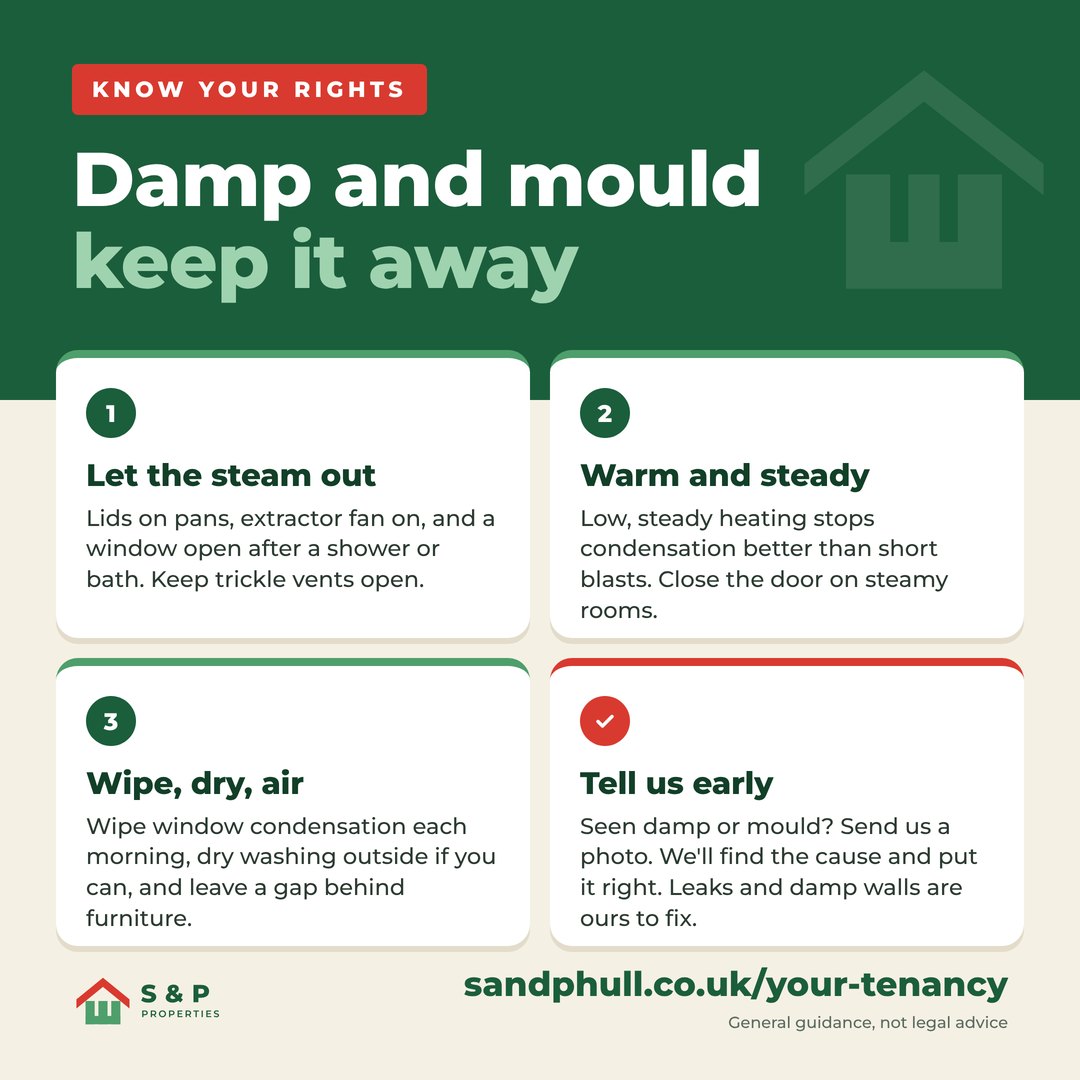
Infographic: Damp and mould, keep it away. 1, let the steam out: lids on pans, extractor fan on, and a window open after a shower or bath; keep trickle vents open. 2, warm and steady: low, steady heating stops condensation better than short blasts; close the door on steamy rooms. 3, wipe, dry, air: wipe window condensation each morning, dry washing outside if you can, and leave a gap behind furniture. Tell us early: seen damp or mould? Send us a photo. We'll find the cause and put it right. Leaks and damp walls are ours to fix.
Our Know your rights cardGeneral guidance, not legal advice

Hull winters are cold and damp, and that's when condensation and black mould show up: on window frames, in bathroom corners, behind wardrobes. Most of it starts with everyday moisture from cooking, showers and drying clothes, and a few simple habits make a real difference.

Three habits that keep mould away

  1. Let the steam outPut lids on pans, switch the extractor fan on, and open a window after a shower or bath. Keep trickle vents (the slots at the top of the window frames) open.
  2. Keep it warm and steadyLow, steady heating stops condensation better than short blasts. Close the door on the kitchen or bathroom while it's steamy, so the moisture doesn't travel.
  3. Wipe, dry, airWipe condensation off windows and sills each morning. Dry washing outside when you can, or in a room with the window open. Leave a gap between furniture and outside walls.
  4. How we do itSeen damp or mould? Tell us early, with a photo. We'll find the cause and put it right.

A few more tips

  • Don't block vents or air bricks, and don't switch extractor fans off at the wall.
  • Small spots on sealant or tiles can be wiped off with a mould spray. Wear gloves, open a window, and don't brush or vacuum it.
  • Keep wardrobes and cupboards aired, and don't overfill them against outside walls.
  • A tumble dryer needs to vent outside, unless it's a condenser or heat-pump dryer.

When it isn't condensation

Some damp has nothing to do with how you live in the home. Damp that appears after rain, a tide mark low down on a wall, a musty smell that won't shift, peeling wallpaper or a patch that keeps coming back can all mean a leak or a problem with the building. That's for us to fix, so tell us straight away.

Your rights

Your landlord must keep your home fit to live in and free from serious hazards, and damp and mould are among them. Report it to us first, using the repair form or by calling 01482 218060. If a landlord doesn't put things right, private tenants can contact Hull City Council, which can inspect the home and make the landlord act.

You may have heard of Awaab's Law, which sets deadlines for social landlords to deal with damp and mould. The government plans to extend it to private renting, but hasn't set a date yet. We don't wait for it: if you report damp, we'll look into it and put it right.

The full guideYour tenancy: damp and mould, repairs and visitssandphull.co.uk/your-tenancy/#damp-and-mould

As shared on our socials

Follow us on X and LinkedIn for plain-English guides for Hull tenants, letting-law updates and news from S & P, every week.

S & P Properties@sandphull
Hull winters are damp. Simple habits that keep mould away, and when to tell your landlord 🏠💧 sandphull.co.uk/noticeboard/damp-and-mould-winter-tips-hull #Hull #KnowYourRights
S & P PropertiesProperty management · Hull
Winter is when condensation and black mould show up in Hull homes: on window frames, in bathroom corners, behind wardrobes. Most of it starts with everyday moisture, and a few habits make a real difference: • Let the steam out: lids on pans, extractor fan on, a window open after a shower. • Keep the heating low and steady rather than in short blasts, and close the door on steamy rooms. • Wipe condensation off windows each morning, dry washing outside when you can, and leave a gap behind furniture. Damp that appears after rain, or keeps coming back, may be a leak or a problem with the building. That's for your landlord to fix, so tell them early, with photos. Our tenants can report damp any time, and we'll find the cause and put it right. Our full guide: sandphull.co.uk/noticeboard/damp-and-mould-winter-tips-hull #Hull #RentersRights #DampAndMould #Lettings

This post is general guidance, not legal advice. Questions? Call us on 01482 218060 or email hello@sandphull.co.uk, Monday to Friday, 9am to 5pm.
More from the noticeboard

All notices
Know your rights23 Nov
4 min read

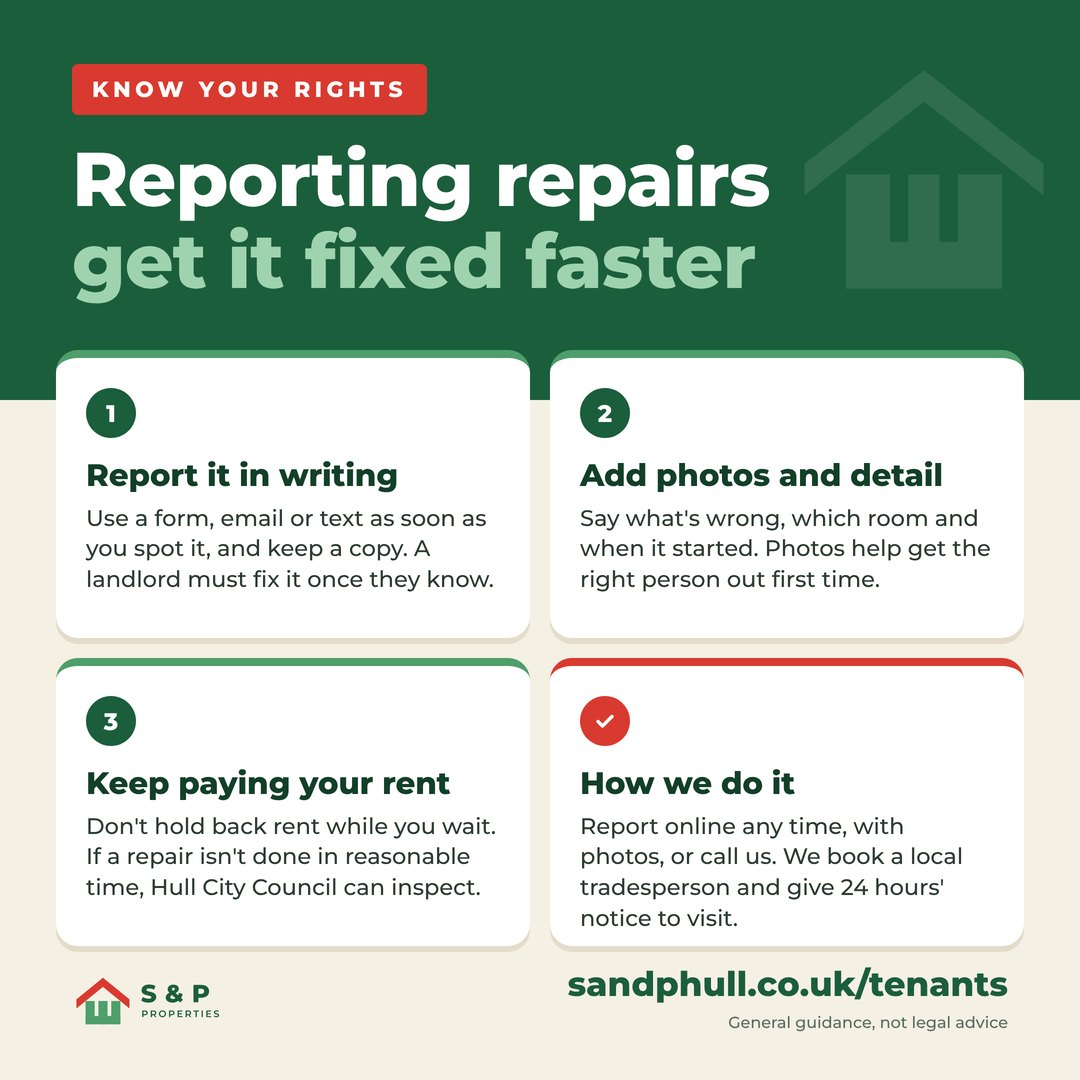
Reporting repairs: how to get things fixed

Something broken at home? How to report a repair so it gets fixed faster, what your landlord must repair, and what to do if it isn't sorted.

Read more
Know your rights19 Nov
3 min read

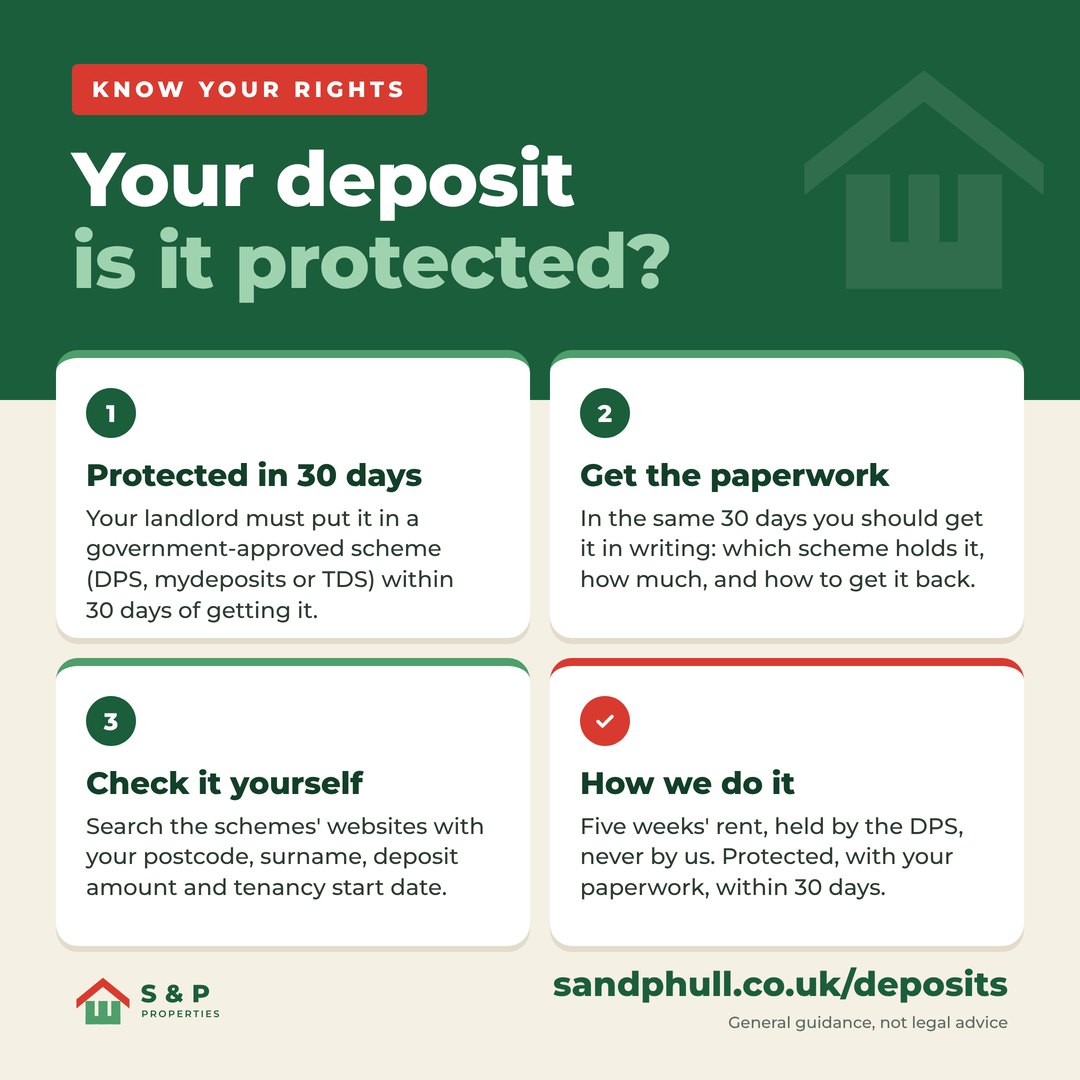
Your deposit: is it protected?

Your landlord must protect your deposit in a government-approved scheme within 30 days. What should happen, how to check yours, and what to do if it isn't.

Read more
Know your rights16 Nov
3 min read

Rent increases: what the rules say

How often your rent can go up, the notice your landlord must give on Form 4A, and how to challenge a rise at tribunal if you think it's too high.

Read more